

Which fertility ultrasound do you need?
If your doctor has mentioned a HyCoSy or a sonohysterogram, you may be wondering how they differ and why you’ve been referred for one and not the other. Comparing a HyCoSy vs sonohysterogram comes down to one question, what does your doctor need to know? A sonohysterogram looks inside your uterus. A HyCoSy looks inside your uterus too, then checks whether your fallopian tubes are open.
Both are gentle saline ultrasounds, done at the same point in your cycle, at our Westmead and Bella Vista clinics. This guide explains what each test checks, how to prepare and what each costs, so you can feel ready for your appointment.
Differences Between HyCoSy vs Sonohysterogram
| Compare | HyCoSy | Sonohysterogram |
|---|---|---|
What it checks | Whether your fallopian tubes are open, plus the inside of your uterus | The inside of your uterus, its shape and lining |
Common reasons | Difficulty getting pregnant, unexplained infertility, a history of pelvic infection, endometriosis or ectopic pregnancy | Heavy bleeding, recurrent pregnancy loss, IVF implantation failure, a thickened lining |
How it works | Saline is passed into the uterus, then saline with tiny air bubbles is followed through the tubes towards the ovaries | Saline is passed into the uterus to open up the cavity for a clear view |
When it’s done | Day 5 - 11 of your cycle | Day 5 - 11 of your cycle |
How to prepare | Avoid intercourse from day 5 of your period; take 2 ibuprofen 1 hour before; follow bladder instructions | Avoid intercourse for 5 days before; take 2 ibuprofen 30 minutes before |
Appointment length | Our team will let you know how long to allow | Around 15 - 60 minutes |
Results | Usually discussed with you straight after your test, with a formal report within 48 hours | Your report is signed off by our doctors, then sent to your referring doctor |
Afterwards | Cramping, spotting or watery discharge for a day or two | Cramping, spotting or watery discharge for a few hours |
What is a HyCoSy?
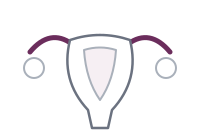
A HyCoSy (hysterosalpingo-contrast-sonography) is an ultrasound test that checks whether your fallopian tubes are open. It starts with a sonohysterogram to check the inside of your uterus. Saline with tiny air bubbles is then passed through your tubes, and ultrasound shows whether it flows towards your ovaries. No radiation or iodinated contrast is used.
Learn more about our HyCoSy service.

What is a sonohysterogram?
A sonohysterogram is an ultrasound of the inside of your uterus. A small amount of sterile saline is gently passed into the uterus through a thin catheter, which opens up the cavity so we can clearly see its shape and lining. It can show polyps, fibroids, scarring (adhesions) and differences in the shape of the uterus.
Learn more about our sonohysterogram service.
HyCoSy vs Sonohysterogram, which test do you need?
Choosing between a fallopian tube test vs a uterus scan depends on what your doctor needs to know, and your referral will say which one you need.
A sonohysterogram is often recommended for:
- Heavy or irregular bleeding, to check for polyps, fibroids or thickening of the lining
- Recurrent pregnancy loss or a history of preterm labour
- Implantation failure during IVF
- A lining that looked thickened or irregular on a routine scan
A HyCoSy is often recommended if you:
- Are having difficulty getting pregnant, or have unexplained infertility
- Are planning pregnancy at an older age
- Have a history of pelvic infection, endometriosis or ectopic pregnancy
- May have blocked or damaged fallopian tubes
Because a HyCoSy includes a sonohysterogram, one appointment can look at both your uterus and your tubes. If you’re unsure which test you’ve been referred for, check with your doctor or contact us before you book.
Frequently asked questions
A sonohysterogram checks the inside of your uterus, looking at its shape and lining for polyps, fibroids or scarring. A HyCoSy checks whether your fallopian tubes are open. It starts with the same saline view of the uterus, then follows the fluid through your tubes towards your ovaries.